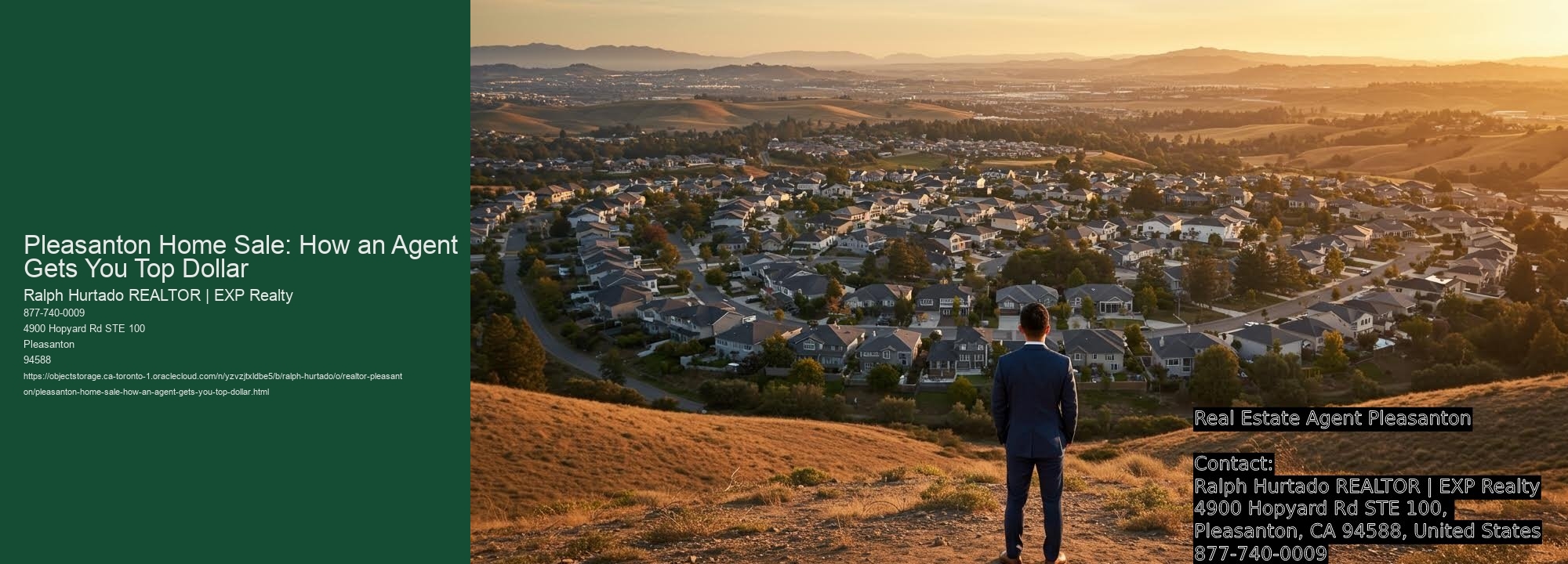
Okay, so youre thinking about acquiring or offering in Pleasanton, California in 2025? Real Estate Agent Pleasanton . Smart relocate! Its a great location to live. Allows speak about what the real estate market might appear like after that.
Think about it such as this: Pleasantons always been a desirable location, and thats not most likely to alter drastically. Were most likely visiting a continuation of some vital trends. Rate of interest will undoubtedly play a huge duty. If they stay high, that might cool down things down a little bit, making it a little bit easier for customers. If they drop, expect even more competition.
Supply, indicating the variety of homes available, is one more big element. If there aren't several houses on the marketplace, prices often tend to remain high. New construction could assist alleviate that, yet Pleasanton isn't specifically stretching with brand-new advancement. So, expect a quite open market on the whole.
Forecasts are constantly difficult, yet Id wager on continued need for Pleasantons wonderful colleges, safe communities, and convenient location. These are points that continually bring in people. Millennial and Gen Z purchasers will likely be entering the market a growing number of, shaping what kind of homes are preferred. Think smaller sized, a lot more sustainable, and tech-friendly.
Eventually, navigating the Pleasanton real estate market in 2025 will be about understanding these fads and having a person who recognizes the town throughout. Thats where I come in. Consider me your overview to locating the best Pleasanton home, or obtaining the very best possible rate if youre selling. Allows conversation and make a plan that fits your requirements and goals.
Okay, so youre thinking about making Pleasanton your home in 2025? Smart move! As your pleasant Pleasanton real estate agent, Ive got my finger on the pulse of the town and can tell you, its a wonderful location to be. Yet Pleasanton isn't simply one big, uniform block of houses. Its a collection of special areas, each with its very own ambiance and allure. So, lets shine a community limelight on a couple of leading locations that you ought to most definitely consider as you begin your house search.
Initially, youve obtained the historical midtown location. Believe tree-lined roads, lovely Victorian homes, and a real sense of community. Youre steps far from remarkable dining establishments, stores, and the farmers market. Its ideal if you enjoy walkability and being in the heart of the activity.
After that, theres the newer development in the Bernal area. These homes are frequently larger and much more modern-day, with large lawns. Youre likewise close to parks, trails, and premier schools, making it an excellent choice for families.
And allows not forget the locations closer to capitals. Here, youll discover larger whole lots, magnificent sights, and an extra peaceful, remote atmosphere. Its suitable for those that appreciate nature and a bit of personal privacy.
Certainly, these are simply a couple of highlights. Every community in Pleasanton has something special to offer, and the most effective fit for you will rely on your individual demands and choices. Thats where I can be found in! I can help you discover these areas in even more information, address your concerns, and guide you in the direction of the best Pleasanton neighborhood to call home in 2025. Lets locate your dream place with each other!
Buying a home in Pleasanton in 2025? Exciting, appropriate? But allows be honest, navigating the real estate market can seem like attempting to decode a secret code. Thats where an excellent Pleasanton real estate agent is available in-- think of them as your local guide, your translator, and your advocate all rolled right into one.
So, what are the actions? Initially, figure out your budget. Speak to a lender, get pre-approved, and comprehend what you can genuinely pay for. This stops heartbreak later. Next, partner with a top-notch Pleasanton real estate agent. Theyll recognize the communities, the institutions, the covert treasures, and, most importantly, the present market fads. Think about them as having their finger on the pulse of Pleasanton real estate.
After that comes the fun part: browsing! Your agent will curate listings based on your wants and needs, guiding you with open homes and private showings.
After your deal is approved (hooray!), theres still function to do. Inspections, evaluations, and documentation galore! Your agent will work with every one of this, ensuring whatever runs smoothly and you recognize each action. Finally, shutting day gets here-- authorizing the records and formally becoming a Pleasanton homeowner.
It might sound like a great deal, however with a skilled Pleasanton real estate agent at hand in 2025, the home getting procedure can be a remarkably smooth and even enjoyable trip. Theyre there to address your concerns, relieve your worries, and make your imagine owning a home in Pleasanton a reality.
Okay, so youre dreaming of owning a home in Pleasanton in 2025? Great! Its a lovely place to live. However lets be genuine, purchasing a home, particularly in a desirable location like Pleasanton, involves some major financial preparation. Consider this guide as your pleasant area real estate agent, prepared to debunk the mortgage process and provide some valuable pointers.
First points initially: financing. Thats where mortgage choices been available in. Theres no one-size-fits-all remedy right here. Are you checking out a fixed-rate mortgage for foreseeable monthly settlements, or a variable-rate mortgage that might start reduced but could fluctuate? What about government-backed loans like FHA or VA, which can be terrific choices for certain buyers? Recognizing these different kinds is key.
And its not nearly choosing a car loan kind. Its about understanding your credit score, your debt-to-income ratio, and just how much of a down payment you can realistically manage. Lenders are mosting likely to check out every one of these factors when deciding whether to authorize your application and what interest rate to offer.
Heres where your friendly Pleasanton real estate agent can be found in convenient. We can aid you navigate the financing landscape, link you with reputable mortgage brokers, and even provide you some pointers on just how to enhance your financial account prior to you also begin taking a look at homes. Consider us as your source throughout the entire process.
Remember, buying a home is a big decision. Do not hurry right into it. Put in the time to discover your funding alternatives, obtain pre-approved for a mortgage, and work with a trusted real estate specialist that knows the Pleasanton market throughout. With the best preparation and advice, that fantasize Pleasanton home can absolutely become a reality in 2025!
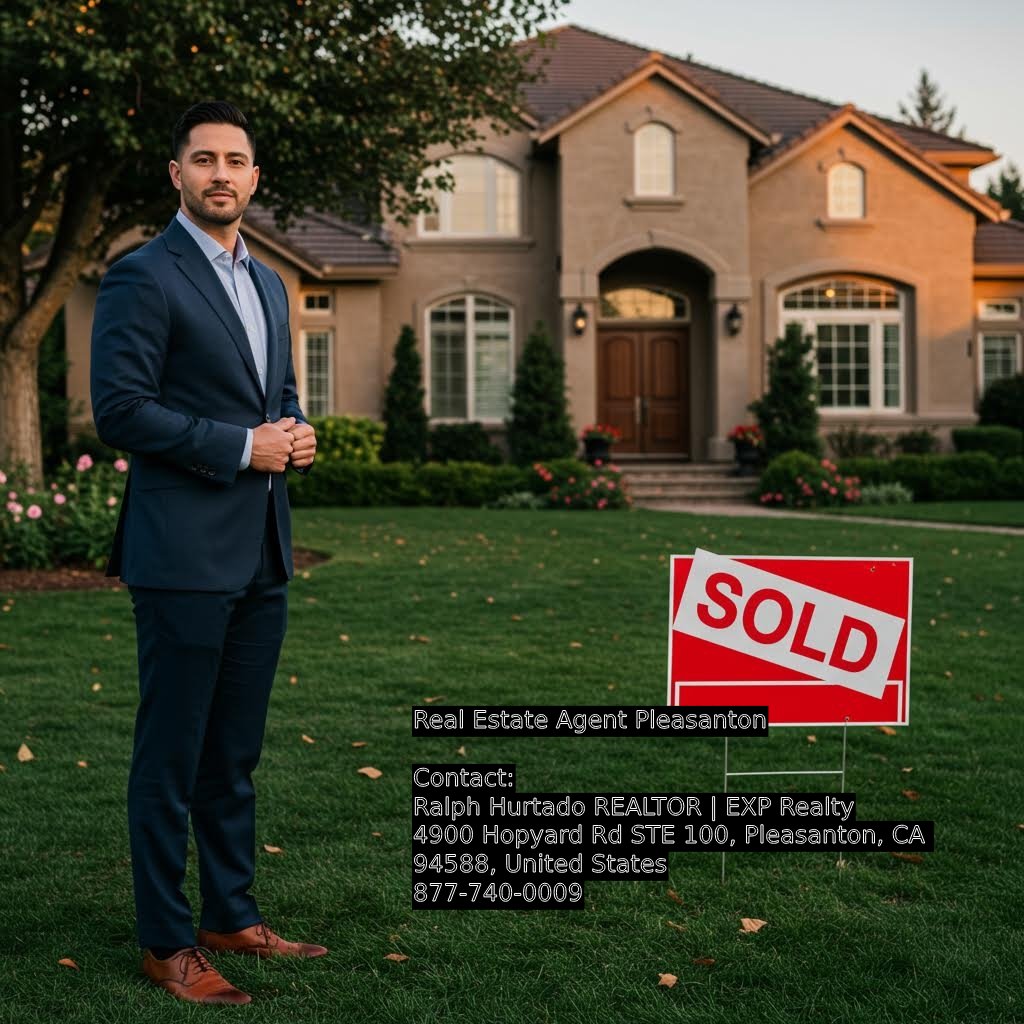
Finding the appropriate real estate agent in Pleasanton can seem like looking for that best pair of pants-- you recognize what you desire, yet it takes some trying on to find the in shape thats simply right. And in 2025, with the Pleasanton real estate market constantly changing, having a knowledgeable and personable agent by your side is more essential than ever.
Its not nearly finding a person who can unlock doors and procedure documents. Its concerning discovering a person who recognizes your requirements, your lifestyle, and your vision for your future home. Do you visualize a sprawling estate in Ruby Hillside, or a comfortable condominium midtown? Do you focus on premier institutions, easy access to treking trails, or a vivid social scene? An excellent Pleasanton agent will pay attention to your concerns and tailor their search accordingly.
Working with a Pleasanton real estate agent must seem like a partnership, not a transaction. Search for a person that connects clearly, reacts promptly, and truly appreciates aiding you attain your real estate objectives. Do not be afraid to interview numerous representatives and ask concerning their experience, their techniques, and their link to the Pleasanton area. After all, youre entrusting them with a considerable investment and a crucial life choice. Finding the best fit deserves the effort-- it can make all the distinction in navigating the 2025 Pleasanton real estate landscape with confidence and ultimately finding your desire home.

Considering planting roots in Pleasanton? Youre not the only one! This captivating The golden state community is humming, and completely factor. Buying Pleasanton real estate uses an engaging mix of way of life benefits and financial chances. But browsing the marketplace, especially as we look towards 2025, requires a wise approach.
Neglect the get-rich-quick systems. Real estate in Pleasanton is about long-term worth. Were talking about a community with premier colleges, gorgeous parks, a vibrant downtown, and a hassle-free place near to major work facilities in the Bay Location. These aren't just nice-to-haves; theyre the bedrock of a steady and appreciating market.
So, what are some approaches for maximizing your investment? First, collaborate with an educated neighborhood expert. Someone that comprehends the subtleties of Pleasantons various areas, the authorization procedure, and the future advancement strategies. Think about them as your personal Pleasanton real estate tourist guide.
Second, consider your financial investment objectives. Are you trying to find a family members home, a rental property, or a flip chance? Each course calls for a different technique. As an example, a family could focus on proximity to particular institutions, while a financier might focus on residential properties with remodelling capacity.
Ultimately, do not be afraid to assume outside the conventional single-family home. Condos, condominiums, and also vacant land can provide outstanding possibilities, specifically as Pleasanton remains to advance.
Expecting 2025, dealing with a committed real estate agent who knows Pleasanton throughout is more crucial than ever before. They can offer you with a "" Home Guide"" point of view, maintaining you informed concerning market fads, prospective mistakes, and, most importantly, the right properties to match your desires and monetary goals. Buying Pleasanton real estate is an investment in your future, and with the right method and a relied on overview, that future looks bright.
Alright, so youre considering growing roots in Pleasanton, California in the future, perhaps even 2025? Superb selection! As a real estate agent working in Pleasanton, let me repaint you a picture of what life is actually like here, beyond the shiny sales brochures. Its more than simply houses; its about the community and the lifestyle.
Pleasanton is a place where you can genuinely feel a feeling of belonging. The downtown area is the heart of everything, a captivating mix of historical structures housing locally possessed shops, dining establishments with amazing outdoor patio areas, which traditional sectarian feeling. Expect to spend weekend breaks strolling Key Road, grabbing coffee at a neighborhood cafe, and perhaps capturing a show in the park. Community events are a huge deal below, from farmers markets bursting with fresh produce to holiday ceremonies that bring everyone together.
The lifestyle below is active, but not in a hectic, big-city sort of method. Assume a lot more relaxed and outdoorsy. There are tons of parks and tracks for treking, cycling, and simply enjoying the California sunlight. Families are a big component of the Pleasanton ambiance, so youll find great colleges and plenty of tasks geared in the direction of youngsters. Expect to see kids playing sports in the parks and families picnicking on weekends.
Of course, remaining in the Bay Location, Pleasanton offers a hassle-free place. Youre close sufficient to San Francisco and Silicon Valley for work or amusement, but far sufficient away to get away the hustle and bustle. Commuting can be a variable, so thats something joined definitely talk about if youre serious concerning getting.
For 2025, expect the real estate market to continue to be affordable, but with an excellent approach and an experienced agent on your side, discovering your desire home in Pleasanton is definitely attainable. Well navigate the marketplace together, focusing on discovering an area that fits your demands and aligns with the Pleasanton lifestyle youre searching for. More than just a house, well locate you a home in an area youll love.
 |
The examples and perspective in this article may not represent a worldwide view of the subject. (March 2023)
|
| Property law |
|---|
 |
| Part of the common law series |
| Types |
|
| Acquisition |
|
| Estates in land |
|
| Conveyancing |
|
| Future use control |
|
| Nonpossessory interest |
|
| Related topics |
|
| Other common law areas |
Higher category: Law and Common law |
Real estate is property consisting of land and the buildings on it, along with its natural resources such as growing crops (e.g. timber), minerals or water, and wild animals; immovable property of this nature; an interest vested in this (also) an item of real property, (more generally) buildings or housing in general.[1][2] In terms of law, real relates to land property and is different from personal property, while estate means the "interest" a person has in that land property.[3]
Real estate is different from personal property, which is not permanently attached to the land (or comes with the land), such as vehicles, boats, jewelry, furniture, tools, and the rolling stock of a farm and farm animals.
In the United States, the transfer, owning, or acquisition of real estate can be through business corporations, individuals, nonprofit corporations, fiduciaries, or any legal entity as seen within the law of each U.S. state.[3]
The natural right of a person to own property as a concept can be seen as having roots in Roman law as well as Greek philosophy.[4] The profession of appraisal can be seen as beginning in England during the 1500s, as agricultural needs required land clearing and land preparation. Textbooks on the subject of surveying began to be written and the term "surveying" was used in England, while the term "appraising" was more used in North America.[5] Natural law which can be seen as "universal law" was discussed among writers of the 15th and 16th century as it pertained to "property theory" and the inter-state relations dealing with foreign investments and the protection of citizens private property abroad. Natural law can be seen as having an influence in Emerich de Vattel's 1758 treatise The Law of Nations which conceptualized the idea of private property.[6]
One of the largest initial real estate deals in history known as the "Louisiana Purchase" happened in 1803 when the Louisiana Purchase Treaty was signed. This treaty paved the way for western expansion and made the U.S. the owners of the "Louisiana Territory" as the land was bought from France for fifteen million dollars, making each acre roughly 4 cents.[7] The oldest real estate brokerage firm was established in 1855 in Chicago, Illinois, and was initially known as "L. D. Olmsted & Co." but is now known as "Baird & Warner".[8] In 1908, the National Association of Realtors was founded in Chicago and in 1916, the name was changed to the National Association of Real Estate Boards and this was also when the term "realtor" was coined to identify real estate professionals.[9]
The stock market crash of 1929 and the Great Depression in the U.S. caused a major drop in real estate worth and prices and ultimately resulted in depreciation of 50% for the four years after 1929.[10] Housing financing in the U.S. was greatly affected by the Banking Act of 1933 and the National Housing Act in 1934 because it allowed for mortgage insurance for home buyers and this system was implemented by the Federal Deposit Insurance as well as the Federal Housing Administration.[11] In 1938, an amendment was made to the National Housing Act and Fannie Mae, a government agency, was established to serve as a secondary market for mortgages and to give lenders more money in order for new homes to be funded.[12]
Title VIII of the Civil Rights Act in the U.S., which is also known as the Fair Housing Act, was put into place in 1968 and dealt with the incorporation of African Americans into neighborhoods as the issues of discrimination were analyzed with the renting, buying, and financing of homes.[13] Internet real estate as a concept began with the first appearance of real estate platforms on the World Wide Web (www) and occurred in 1999.
Residential real estate may contain either a single family or multifamily structure that is available for occupation or for non-business purposes.[14]
Residences can be classified by and how they are connected to neighbouring residences and land. Different types of housing tenure can be used for the same physical type. For example, connected residences might be owned by a single entity and leased out, or owned separately with an agreement covering the relationship between units and common areas and concerns.[15]
According to the Congressional Research Service, in 2021, 65% of homes in the U.S. are owned by the occupier.[16]
Other categories
The size of havelis and chawls is measured in Gaz (square yards), Quila, Marla, Beegha, and acre.
See List of house types for a complete listing of housing types and layouts, real estate trends for shifts in the market, and house or home for more general information.
Real estate can be valued or devalued based on the amount of environmental degradation that has occurred. Environmental degradation can cause extreme health and safety risks. There is a growing demand for the use of site assessments (ESAs) when valuing a property for both private and commercial real estate.[17]
Environmental surveying is made possible by environmental surveyors who examine the environmental factors present within the development of real estate as well as the impacts that development and real estate has on the environment.
Green development is a concept that has grown since the 1970s with the environmental movement and the World Commission on Environment and Development. Green development examines social and environmental impacts with real estate and building. There are 3 areas of focus, being the environmental responsiveness, resource efficiency, and the sensitivity of cultural and societal aspects. Examples of Green development are green infrastructure, LEED, conservation development, and sustainability developments.
Real estate in itself has been measured as a contributing factor to the rise in green house gases. According to the International Energy Agency, real estate in 2019 was responsible for 39 percent of total emissions worldwide and 11 percent of those emissions were due to the manufacturing of materials used in buildings.[18]
| Part of a series on |
| Living spaces |
|---|
 |
 Housing portal Housing portal |

Real estate development involves planning and coordinating of housebuilding, real estate construction or renovation projects.[19] Real estate development can be less cyclical than real estate investing.[20]
In markets where land and building prices are rising, real estate is often purchased as an investment, whether or not the owner intends to use the property. Often investment properties are rented out, but "flipping" involves quickly reselling a property, sometimes taking advantage of arbitrage or quickly rising value, and sometimes after repairs are made that substantially raise the value of the property. Luxury real estate is sometimes used as a way to store value, especially by wealthy foreigners, without any particular attempt to rent it out. Some luxury units in London and New York City have been used as a way for corrupt foreign government officials and business people from countries without strong rule of law to launder money or to protect it from seizure.[21] Investment in real estate can be categorized by financial risk into core, value-added, and opportunistic.[22]
cite web: CS1 maint: bot: original URL status unknown (link) The dictionary definition of real estate at Wiktionary
 Quotations related to Real estate at Wikiquote
|
|
| By location |
|
| Types |
|
| Sectors |
|
| Law and regulation |
|
| Economics, financing and valuation |
|
| Parties |
|
| Other |
|
|
|
| By owner |
|
||||
|---|---|---|---|---|---|
| By nature |
|
||||
| Commons |
|
||||
| Theory |
|
||||
| Applications |
|
||||
| Disposession/ redistribution |
|
||||
| Scholars (key work) |
|
||||
|
|||||
| Authority control databases: National |
|
|---|
Pleasanton is a city in Alameda Region, The Golden State, United States. Found in the Amador Valley, it is an upscale suburb in the East Bay region of the San Francisco Bay Area. The populace was 79,871 at the 2020 census. In 2005 and 2007, Pleasanton was rated the richest middle-sized city in the United States by the Census Bureau. Pleasanton is home to the headquarters of Safeway, Workday, Ellie Mae, Roche Molecular Diagnostics, Blackhawk Network Holdings, Veeva Equipments, and Simpson Production Business. Other significant companies include Kaiser Permanente, Oracle, and Macy's. Although Oakland is the Alameda Region seat, a few area workplaces lie in Pleasanton. The Alameda Region Fairgrounds are located in Pleasanton, where the county fair is held during the recently of June and the first week of July. Pleasanton Ridge Regional Park is situated on the west side of community.
.
 |
This article needs additional citations for verification. (September 2016)
|
|
Tri-Valley
|
|
|---|---|
|
Area of the East Bay
|
|

Tri-Valley Landscape
|
|

Tri-Valley location in California
|
|
 Tri-Valley
Location in the United States
|
|
| Coordinates: 37°39′45″N 121°52′29″W / 37.66250°N 121.87472°W | |
| Population
|
|
|
• Total
|
361,000 |
| Time zone | UTC-8 (Pacific Time Zone) |
| • Summer (DST) | UTC-7 (PDT) |
The Tri-Valley area is grouping of three valleys in the East Bay region of California's Bay Area. The three valleys are Amador Valley, Livermore Valley, and San Ramon Valley. The Tri-Valley encompasses the cities of Dublin, Livermore, Pleasanton and San Ramon, the town of Danville, and the CDPs of Alamo, Blackhawk, Camino Tassajara, Diablo, and Norris Canyon. The area is known for its Mediterranean climate, wineries, and nature. It is primarily suburban in character. The total population of the Tri-Valley was 400,213 at the 2020 U.S. Census. It offers more affordable living accommodations than the cities of San Francisco and San Jose.[1][2]
The Ohlone tribe settled the area circa 2000 BC, particularly in the northern part of Pleasanton. In AD 1772, however, Spanish settlers involved with the nearby mission work at Mission San Jose restructured the Ohlone way of life.[3][4]
The area began to be developed when the Gold Rush ended. During this period, the area went from being marshland to agricultural.[5]
The climate of the Tri-Valley is mild. Most rain falls in the winter. Snow almost never occurs, although it sometimes falls on the tops of surrounding mountains, especially Mt. Diablo. Summer days are in the 80s to over 100 °F, but nights are often cool. In winter, daytime temperatures reach the 50s and 60s, while nights are in the 30s and 40s, dipping on rare occasions into the 20s. Mean annual rainfall ranges from about 14 in (360 mm) in Livermore to 23 in (580 mm) in Alamo.[6]
The Tri-Valley is serviced by WHEELS, operated by the Livermore Amador Valley Transit Authority (LAVTA), a bus agency that operates local bus service throughout Livermore, Pleasanton and Dublin, including service to Hacienda Business Park, Lawrence Livermore National Laboratory, Las Positas College, Stoneridge Mall, the West Dublin/Pleasanton BART Station and the Dublin/Pleasanton BART station.
Two major highways, Interstates 580 and 680 cross the Tri-Valley area. Interstate 580 runs east-west, connecting the area to the Central Valley to the east and the North Bay area to the west. Interstate 680 runs north-south, connecting the area to the South Bay area in the south, and the Concord-Walnut Creek area in the north. The two interstates cross on the border of Dublin and Pleasanton.
The Tri-Valley area is also serviced by BART, offering service to the rest of the San Francisco Bay Area via two stops: West Dublin/Pleasanton and the Dublin/Pleasanton terminus station.[7] The West Dublin/Pleasanton Station opened in 2011, and was the first infill station on an existing line. In 2018, BART cancelled plans[8] to extend the line to Livermore. However, the Tri-Valley–San Joaquin Valley Regional Rail Authority is in the planning process[9] for a rail connection between BART, ACE, and the San Joaquin Valley called the Valley Link.

The Tri-Valley is home to the corporate headquarters of many companies, including 10X Genomics, 24 Hour Fitness, Architectural Glass and Aluminum, Bay Area News Group, Blackhawk Network Holdings, CallidusCloud, Chevron, The Cooper Companies, Discovery Toys, Ellie Mae, GE Digital, Gillig Corporation, Patelco Credit Union, Prosoft Engineering, Ross Stores, SafeAmerica Credit Union, Safeway, Shaklee, TriNet, Veeva Systems, Visioneer, WANdisco, The Wine Group, Product10x Accelerator, Salestable and Workday.
Major employment centers include Bishop Ranch and Hacienda Business Park.
Lawrence Livermore National Laboratory and Sandia National Laboratories are also major employers in the region.

The Tri-Valley features access to many recreational options, including Alviso Adobe Community Park, Blackhawk Museum, Brushy Peak Regional Preserve, Del Valle Regional Park, Dublin Hills Regional Park, Eugene O'Neill National Historic Site, Forest Home Farms, Iron Horse Regional Trail, Las Trampas Regional Wilderness, Little Hills Picnic Ranch, Livermore Valley Wine Country, Morgan Territory Regional Preserve, Mount Diablo State Park, Pleasanton Ridge Regional Park, Shadow Cliffs Regional Recreation Area and The Wave Waterpark.
| Bodies of water |
|
 |
|||||||||||
|---|---|---|---|---|---|---|---|---|---|---|---|---|---|
| Counties |
|
||||||||||||
| Cities and towns |
|
||||||||||||
| CDPs over 10k |
|
||||||||||||
| Sub-regions |
|
||||||||||||
| Other |
|
||||||||||||
|
Sacramento (capital)
|
|
| Topics |
|
| Regions |
|
| Metro regions |
|
| Counties |
|
| Most populous cities |
|
 California portal California portal |
|
 |
This article possibly contains original research. (July 2014)
|
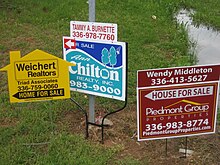
Real estate agents and real estate brokers are people who represent sellers or buyers of real estate or real property. While a broker may work independently, an agent usually works under a licensed broker to represent clients.[1] Brokers and agents are licensed by the state to negotiate sales agreements and manage the documentation required for closing real estate transactions.
A real estate broker typically receives a real estate commission for successfully completing a sale. Across the U.S, this commission can generally range between 5-6% of the property's sale price for a full-service broker but this percentage varies by state and even region.[2]
In most jurisdictions in the United States, a person must have a license to perform licensed activities, and these activities are defined within the statutes of each state. The main feature of the requirement for having a license to perform those activities is the work done "for compensation". Hence, hypothetically, if a person wants to help a friend out in either selling or buying a property, and no compensation of any kind is expected in return, then a license is not needed to perform all the work. However, since most people would expect to be compensated for their efforts and skills, a license would be required by law before a person may receive remuneration for services rendered as a real estate broker or agent. Unlicensed activity is illegal and the state real estate commission has the authority to fine people who are acting as real estate licensees, but buyers and sellers acting as principals in the sale or purchase of real estate are usually not required to be licensed. It is important to note that in some states, lawyers handle real estate sales for compensation without being licensed as brokers or agents. However, even lawyers can only perform real estate activities that are incidental to their original work as a lawyer. It cannot be the case that a lawyer can become a seller's selling agent if that is all the service that is being requested by the client. Lawyers would still need to be licensed as a broker if they wish to perform licensed activities. Nevertheless, lawyers do get a break in the minimum education requirements (for example, 90 hours in Illinois).[3]
Some other states have recently eliminated the salesperson's license, instead, all licensees in those states automatically earn their broker's license.
The term "agent" is not to be confused with salesperson or broker. An agent is simply a licensee that has entered into an agency relationship with a client. A broker can also be an agent for a client. It is commonly the firm that has the actual legal relationship with the client through one of their sales staff, be they salespersons or brokers.
In all states, the real estate licensee must disclose to prospective buyers and sellers the nature of their relationship [4]
Some U.S. state real estate commissions – notably Florida's[5] after 1992 (and extended in 2003) and Colorado's[6] after 1994 (with changes in 2003) created the option of having no agency or fiduciary relationship between brokers and sellers or buyers.
As noted by the South Broward Board of Realtors, Inc. in a letter to State of Florida legislative committees:
"The Transaction Broker crafts a transaction by bringing a willing buyer and a willing seller together and provides the legal documentation of the details of the legal agreement between the same. The Transaction Broker is not a fiduciary of any party, but must abide by the law as well as professional and ethical standards." (such as NAR Code of Ethics).
The result was that, in 2003, Florida created a system where the default brokerage relationship had "all licensees ... operating as transaction brokers, unless a single agent or no brokerage relationship is established, in writing, with the customer"[7][8] and the statute required written disclosure of the transaction brokerage relationship to the buyer or seller customer only through July 1, 2008.
In the case of both Florida[8] and Colorado,[6] dual agency and sub-agency (where both listing and selling agents represent the seller) no longer exist.
Other brokers and agents may focus on representing buyers or tenants in a real estate transaction. However, licensing as a broker or salesperson authorizes the licensee to legally represent parties on either side of a transaction and providing the necessary documentation for the legal transfer of real property. This business decision is for the licensee to decide. They are fines for people acting as real estate agents when not licensed by the state.
In the United Kingdom, an estate agent is a person or business entity whose business is to market real estate on behalf of clients. There are significant differences between the actions, powers, obligations, and liabilities of brokers and estate agents in each country, as different countries take markedly different approaches to the marketing and selling of real property.
Before the Multiple Listing Service (MLS) was introduced in 1967, when brokers (and their licensees) only represented sellers by providing a service to provide legal documentation on the transfer real property, the term "real estate salesperson" may have been more appropriate than it is today, given the various ways that brokers and licensees now help buyers through the legal process of transferring real property. Legally, however, the term "salesperson" is still used in many states to describe a real estate licensee.[citation needed]
After gaining some years of experience in real estate sales, a salesperson may decide to become licensed as a real estate broker (or Principal/qualifying broker) in order to own, manage, or operate their own brokerage. In addition, some states allow college graduates to apply for a broker's license without years of experience. College graduates fall into this category once they have completed the state-required courses as well. California allows licensed attorneys to become brokers upon passing the broker exam without having to take the requisite courses required of an agent. Commonly more coursework and a broker's state exam on real estate law must be passed. Upon obtaining a broker's license, a real estate agent may continue to work for another broker in a similar capacity as before (often referred to as a broker associate or associate broker) or take charge of their own brokerage and hire other salespersons (or broker licensees). Becoming a branch office manager may or may not require a broker's license. Some states allow licensed attorneys to become real estate brokers without taking any exam. In some states, there are no "salespeople" as all licensees are brokers.[9]
Real Estate Services are also called trading services [10]
Flat-fee real estate agents charge a seller of a property a flat fee, $500 for example,[11] as opposed to a traditional or full-service real estate agent who charges a percentage of the sale price. In exchange, the seller's property will appear in the multiple listing service (MLS), but the seller will represent him or herself when showing the property and negotiating a sales price.[11] The result is the seller pays less commission overall (roughly half) when the property sells.[11] This is because a seller will pay a percentage of the sales price to a buyer's agent but not have to pay a percentage to a seller's agent (because there isn't one; the seller is representing himself).
In consideration of the brokerage successfully finding a buyer for the property, a broker anticipates receiving a commission for the services the brokerage has provided. Usually, the payment of a commission to the brokerage is contingent upon finding a buyer for the real estate, the successful negotiation of a purchase contract between the buyer and seller, or the settlement of the transaction and the exchange of money between buyer and seller. Under common law, a real estate broker is eligible to receive their commission, regardless of whether the sale actually takes place, once they secure a buyer who is ready, willing, and able to purchase the dwelling.[12]
Economist Steven D. Levitt famously argued in his 2005 book Freakonomics that real estate brokers have an inherent conflict of interest with the sellers they represent because their commission gives them more motivation to sell quickly than to sell at a higher price. Levitt supported his argument with a study finding brokers tend to put their own houses on the market for longer and receive higher prices for them compared to when working for their clients. He concluded that broker commissions will reduce in future.[13] A 2008 study by other economists found that when comparing brokerage without listing services, brokerage significantly reduced the average sale price.[14]
Real estate brokers who work with lenders can not receive any compensation from the lender for referring a residential client to a specific lender. To do so would be a violation of a United States federal law known as the Real Estate Settlement Procedures Act (RESPA). RESPA ensures that buyers and sellers are given adequate notice of the Real Estate settlement process.[15]
In the United States, the term realtor is trademarked by the National Association of Realtors, which uses it to refer to its active members, who may be real estate agents or brokers.[16][17][18] In Canada, the trademark is used by members of the Canadian Real Estate Association.[19] Both organizations advise against the use of realtor as a generic synonym for real estate agent.[19]
States issue licenses for an annual or multi-year period and require real estate agents and brokers to complete continuing education prior to renewing their licenses. For example, California licensees must complete 45 hours of continuing education every 4 years in topics such as agency, trust fund handling, consumer protection, fair housing, ethics, and risk management.[20]
Several notable groups exist to promote the real estate industry and to assist professionals.
 Media related to Real estate agents at Wikimedia Commons
|
|
| By location |
|
| Types |
|
| Sectors |
|
| Law and regulation |
|
| Economics, financing and valuation |
|
| Parties |
|
| Other |
|
|
|
| Authority control databases: National |
|
|---|


Ralph Hurtado has been my realtor for over 12 years and I have referred him to all my family and friends. Personally, he has helped me sell 3 and purchase 2 of my homes. He is honest, hard working, and someone who has high integrity and morals. When I asked for his guidance on whether we should sell my parents' home which would result in a pretty large commission payment to him, he proposed that we rent it out for a few years first before putting it on the market in order to save us money. Ralph will always put his client's interest first over his own because he genuinely cares about you. He has also made each sale or purchase stress free for me because he helps coordinate everything behind the scenes like scheduling the home inspection, house cleaning, photography, staging, etc. He keeps me informed on every stage of the process. I can call or text him numerous times throughout the day and he will respond within minutes. Even when it was a buyer's market, he manages to secure the best terms and prices for my properties, often receiving asking price or above asking. I have never worked with anyone who has gone above and beyond like he has. Ralph is an expert in his field and I highly recommend him for all of your real estate needs.

Had very little to do with real estate agents before meeting Ralph Hurtado. I was a general contractor, acquiring the land and building houses during the week and preferred to put my for sale signs out and sell them on the weekend myself. Constant increasingly complicated real estate contracts that were difficult for me to understand and the advent of a growing real estate fraternity with their sophisticated methods of advertising, etc., convinced me that employing a real estate agent would be the best method to get the highest sale's price while staying out of legal problems. I interviewed many real estate agents that I saw around town before choosing Ralph Hurtado to sell my house in Union City. I did what Ralph told me to do to the house that would give it the most sale's appeal and we set ( mostly him ) the sale's price accordingly. Obtained a buyer in a short amount of time at full sales price. I was very happy with the outcome, don't think I left anything on the table concerning the sale's price and I liked the ease of that transaction so much that I had Ralph find a duplex in San Leandro that I bought and renovated. Again I was also very satisfied with the outcome. What I like about Ralph is that he is always available ( not two days later as often is the case these days ) to respond to concerns and questions that I have about real estate. For instance, how much do I increase the rent on my rental units. He keeps me informed on what is happening in the real estate world. For instance, he encouraged me for renters to get rental insurance because protects both landlord and renter. In fact, he must get tired of all my questions, but never does. Square shooter who covers all my bases; therefore, he is and will continue to be my real estate agent..

Non-stop spam calls from this guy. Stop calling me!!
Call 877-740-0009, or book online at ralphhurtado.com
A seller disclosure is a legal requirement that provides information to the buyer about the property. These may be structural issues, water damage, previous repairs, environmental hazards, or even neighborhood conditions that may affect the value of the home. To protect both the buyer and the seller in the transaction, sellers in California are required to provide full transparency. It is important to note that not disclosing material defects is legal consequences. The disclosures are usually in the form of standard reports which are the Transfer Disclosure Statement (TDS) and the Natural Hazard Disclosure (NHD) report. It is therefore important to read these documents and understand their content before making a purchase decision.
1. Clean house thoroughly and remove all clutter. (Exterior pressure washing and window cleaning.) 2. Make small repairs (This makes the buyer believe the home has been well taken care of.) 3. Improve the look of the outside (If a buyer has to like the exterior first, then they will have to walk in and they will have to continue liking what they are seeing)) 4. Stage key rooms (Staging makes the buyer have a vision of living in your property)
In 2024, the average time it took for homes in Tri-Valley & Tri-city areas to sell was 17 days. The time from listing to sale varies with market conditions, price, and home condition.
Real estate markets never stand still because they are in a constant state of change. I can share some general trends and information, but then that can be misleading because every home and neighborhood has certain factors that make it special and therefore its value and desirosity. General market reports may not capture the detailed dynamics of your property or local market. To help you make informed decisions, I offer a unique market analysis based on your goals, so you can better navigate the market whether it’s rising or falling. Just contact me to find out what’s happening in your neighborhood and property.


